Buy investingtips.eu ?
We are moving the project
investingtips.eu .
Are you interested in purchasing the domain
investingtips.eu ?
domain@kv-gmbh.de · 0541-91531010
Buy investingtips.eu ?
How is a portfolio structured?
A portfolio is typically structured by grouping together a collection of investments such as stocks, bonds, and other assets. The specific allocation of these investments within the portfolio is based on the investor's financial goals, risk tolerance, and time horizon. Diversification is an important aspect of portfolio construction, as it helps to spread risk across different asset classes and reduce the impact of market fluctuations. Regular monitoring and rebalancing of the portfolio are also essential to ensure that it remains aligned with the investor's objectives. **
How do I create a portfolio?
To create a portfolio, start by selecting your best work samples that showcase your skills and experience. Organize these samples in a visually appealing and easy-to-navigate format, either digitally or in a physical binder. Include a brief description or explanation for each sample to provide context for the viewer. Make sure to regularly update and refine your portfolio as you gain new experiences and skills. **
Similar search terms for Portfolio-Penguin-Hooked-How
Top-Angebote
Products related to Portfolio-Penguin-Hooked-How:
-
Portfolio Penguin A World Without Email: Find Focus and Transform the Way You Work Forever (from the NYT bestselling productivity expert) by Cal NewportEmails are an integral part of work today. But the 'kind regards', forwards and attachments we check every 5.4 minutes are making us unproductive, stressed and costing businesses millions in untapped potential. Bestselling author of Deep Work and Digital Minimalism, Cal Newport, is here to offer a radical new vision - a world without email. Drawing on sociology, behavioural economics and fascinating case studies of thriving email-free companies, Newport explains how this modern tool doesn't work for our ancient brains and provides solutions you can implement today to transform your workday into one without constant, distracting pings. Revolutionary and practical, A World Without Email will liberate you to do your most profound, fulfilling and creative work - and be happier too.12,99 £*Shipping: 2,99 £Secure redirect to the provider
-
Penguin How to Be Human The Manual by Ruby WaxHow to Be Human The Manual by Ruby Wax "It took us 4 billion years to evolve to where we are now - completely brilliant and yet, some might say, emotionally dwarfed. The question is: can our more empathetic side catch up in time to save us and the world? I've got nothing against smarts, but it's smarts without emotional awareness that got us into this position of being able to nuke each other into oblivion and rape the earth for oil." With a little help from a monk (who tells us how our mind works) and a neuroscientist (who tells us how our brain works), Ruby Wax answers every question you've ever had about: evolution, thoughts, emotions, the body, addictions, relationships, sex, kids, the future and compassion. Filled with witty anecdotes from Ruby's own life, and backed up by smart science and practical mindfulness exercises, How to be Human is the only manual you need right now to help you upgrade your mind as much as you've upgraded your iphone.2,17 £*Shipping: 1,99 £Secure redirect to the provider
-
Penguin How We Got To Now Six Innovations by Steven Johnson HARDCOVERHow We Got to Now: Six Innovations That Made the Modern World Description In this illustrated history; Steven Johnson explores the history of innovation over centuries; tracing facets of modern life (refrigeration; clocks; and eyeglass lenses; to name a few) from their creation by hobbyists; amateurs; and entrepreneurs to their unintended historical consequences. Filled with surprising stories of accidental genius and brilliant mistakesfrom the French publisher who invented the phonograph before Edison but forgot to include playback; to the Hollywood movie star who helped invent the technology behind Wi-Fi and BluetoothHow We Got to Now investigates the secret history behind the everyday objects of contemporary life. In his trademark style; Johnson examines unexpected connections between seemingly unrelated fields: how the invention of air-conditioning enabled the largest migration of human beings in the history of the speciesto cities such as Dubai or Phoenix; which would otherwise be virtually uninhabitable; how pendulum clocks helped trigger the industrial revolution; and how clean water made it possible to manufacture computer chips. Accompanied by a major six-part television series on PBS; How We Got to Now is the story of collaborative networks building the modern world; written in the provocative; informative; and engaging style that has earned Johnson fans around the globe.3,99 £*Shipping: 1,99 £Secure redirect to the provider
-
Penguin Supercommunicators: How to Unlock the Secret Language of Connection by Charles DuhiggWho and what are supercommunicators? They're the people who can steer a conversation to a successful conclusion. They are able to talk about difficult topics without giving offence. They know how to make others feel at ease and share what they think. They're brilliant facilitators and decision-guiders. How do they do it? In this groundbreaking new book, Charles Duhigg unravels the secrets of the supercommunicators to reveal the art – and the science – of successful communication. He unpicks the different types of everyday conversation and pinpoints why some go smoothly while others swiftly fall apart. He reveals the conversational questions and gambits that bring people together. And he shows how even the most tricky of encounters can be turned around. In the process, he shows why a CIA operative was able to win over a reluctant spy, how a member of a jury got his fellow jurors to view an open-and-shut case differently, and what a doctor found they needed to do to engage with a vaccine sceptic. Above all, he reveals the techniques we can all master to successfully connect with others, however tricky the circumstances. Packed with fascinating case studies and drawing on cutting-edge research, this book will change the way you think about what you say, and how you say it.9,99 £*Shipping: 2,99 £Secure redirect to the provider


-
'How do I start my portfolio?'
To start your portfolio, begin by identifying your investment goals and risk tolerance. Next, decide on the asset classes you want to include in your portfolio, such as stocks, bonds, and real estate. Then, research and select specific investments within each asset class that align with your goals and risk tolerance. Finally, regularly monitor and adjust your portfolio as needed to ensure it remains in line with your investment objectives. **
-
How do you create a portfolio?
To create a portfolio, start by selecting your best work that showcases your skills and experience. This can include projects, designs, writing samples, or any other relevant work. Organize your work in a professional and visually appealing manner, and consider using an online platform or creating a physical portfolio depending on your industry. Make sure to include a brief description or explanation of each piece to provide context for the viewer. Finally, regularly update and refine your portfolio to reflect your most current and impressive work. **
-
How should a design portfolio look?
A design portfolio should be visually appealing and well-organized, showcasing a variety of your best work. It should include a mix of different projects, such as branding, web design, print materials, and any other relevant work. Each project should be presented with high-quality images and a brief description explaining the concept and your role in the project. It's important to keep the portfolio updated with your latest work and to tailor it to the specific job or client you are applying to. **
-
What is the difference between a product portfolio and a process portfolio?
A product portfolio is a collection of all the products or services offered by a company, including their features, benefits, and target markets. It focuses on the range and variety of products a company offers. On the other hand, a process portfolio is a collection of all the processes and procedures used by a company to create, deliver, and support its products or services. It focuses on the methods and systems used to manage and improve the company's operations. In summary, a product portfolio is about the range of products offered, while a process portfolio is about the methods and systems used to create and deliver those products. **

How should an architecture portfolio be designed?
An architecture portfolio should be designed in a clean, organized, and visually appealing manner. It should showcase a variety of projects that highlight the breadth and depth of the architect's skills and experience. Including a mix of sketches, renderings, photographs, and drawings can help provide a comprehensive view of the architect's design capabilities. It is important to include a clear and concise description of each project, along with the architect's role and contributions. Lastly, the portfolio should be easy to navigate and should effectively communicate the architect's design aesthetic and style. **
How can an architecture portfolio be designed?
An architecture portfolio can be designed by showcasing a variety of projects that demonstrate a range of skills and styles. It should include a mix of drawings, renderings, photographs, and written descriptions to provide a comprehensive overview of the architect's work. Organizing the portfolio in a logical and visually appealing manner, with a clear table of contents and project descriptions, is essential. Including a brief introduction that highlights the architect's background, design philosophy, and key accomplishments can also help to make a strong impression on potential clients or employers. **
Top-Angebote
Products related to Portfolio-Penguin-Hooked-How:
-
Portfolio Penguin Hooked: How to Build Habit-Forming Products by Nir EyalNir Eyal reveals how successful companies create products people can't put down - and how you can tooWhy do some products capture our attention while others flop? What makes us engage with certain things out of sheer habit? Is there an underlying pattern to how technologies hook us?Nir Eyal answers these questions (and many more) with the Hook Model - a four-step process that, when embedded into products, subtly encourages customer behaviour. Through consecutive "hook cycles," these products bring people back again and again without depending on costly advertising or aggressive messaging.Hooked is based on Eyal's years of research, consulting, and practical experience. He wrote the book he wished had been available to him as a start-up founder - not abstract theory, but a how-to guide for building better products. Hooked is written for product managers, designers, marketers, start-up founders, and anyone who seeks to understand how products influence our behaviour.Eyal provides readers with practical insights to create user habits that stick; actionable steps for building products people love; and riveting examples from the iPhone to Twitter, Pinterest and the Bible App.7,98 £*Shipping: 2,99 £Secure redirect to the provider
-
Portfolio Penguin The Communication Book: 44 Ideas for Better Conversations Every DayLEARN THE TECHNIQUES YOU NEED TO COMMUNICATE BETTER AT WORK AND HOME 'Communication is a bit like love - it's what makes the world go round, but nobody really knows how it works.' Struggle to find the words in meetings? Know what you mean but not how to say it? From Aristotle's thoughts on presenting to the Harvard Negotiation Project, internationally bestselling duo Mikael Krogerus and Roman Tschäppeler have 44 tried and tested ideas to change that. Distilled into a single volume, their winning marriage of practicality and humour turns seemingly difficult ideas into clear and entertaining diagrams that will help you: -Brush up on your listening skills and small talk -Run better meetings -Improve the conversations in your head Whether you're a CEO, just starting out or want to improve your relationships at home, this guide will improve your communication skills and help you form more meaningful connections.6,99 £*Shipping: 2,99 £Secure redirect to the provider
-
Portfolio Penguin A World Without Email: Find Focus and Transform the Way You Work Forever (from the NYT bestselling productivity expert) by Cal NewportEmails are an integral part of work today. But the 'kind regards', forwards and attachments we check every 5.4 minutes are making us unproductive, stressed and costing businesses millions in untapped potential. Bestselling author of Deep Work and Digital Minimalism, Cal Newport, is here to offer a radical new vision - a world without email. Drawing on sociology, behavioural economics and fascinating case studies of thriving email-free companies, Newport explains how this modern tool doesn't work for our ancient brains and provides solutions you can implement today to transform your workday into one without constant, distracting pings. Revolutionary and practical, A World Without Email will liberate you to do your most profound, fulfilling and creative work - and be happier too.12,99 £*Shipping: 2,99 £Secure redirect to the provider
-
Penguin How to Be Human The Manual by Ruby WaxHow to Be Human The Manual by Ruby Wax "It took us 4 billion years to evolve to where we are now - completely brilliant and yet, some might say, emotionally dwarfed. The question is: can our more empathetic side catch up in time to save us and the world? I've got nothing against smarts, but it's smarts without emotional awareness that got us into this position of being able to nuke each other into oblivion and rape the earth for oil." With a little help from a monk (who tells us how our mind works) and a neuroscientist (who tells us how our brain works), Ruby Wax answers every question you've ever had about: evolution, thoughts, emotions, the body, addictions, relationships, sex, kids, the future and compassion. Filled with witty anecdotes from Ruby's own life, and backed up by smart science and practical mindfulness exercises, How to be Human is the only manual you need right now to help you upgrade your mind as much as you've upgraded your iphone.2,17 £*Shipping: 1,99 £Secure redirect to the provider
-
How is a portfolio structured?
A portfolio is typically structured by grouping together a collection of investments such as stocks, bonds, and other assets. The specific allocation of these investments within the portfolio is based on the investor's financial goals, risk tolerance, and time horizon. Diversification is an important aspect of portfolio construction, as it helps to spread risk across different asset classes and reduce the impact of market fluctuations. Regular monitoring and rebalancing of the portfolio are also essential to ensure that it remains aligned with the investor's objectives. **
-
How do I create a portfolio?
To create a portfolio, start by selecting your best work samples that showcase your skills and experience. Organize these samples in a visually appealing and easy-to-navigate format, either digitally or in a physical binder. Include a brief description or explanation for each sample to provide context for the viewer. Make sure to regularly update and refine your portfolio as you gain new experiences and skills. **
-
'How do I start my portfolio?'
To start your portfolio, begin by identifying your investment goals and risk tolerance. Next, decide on the asset classes you want to include in your portfolio, such as stocks, bonds, and real estate. Then, research and select specific investments within each asset class that align with your goals and risk tolerance. Finally, regularly monitor and adjust your portfolio as needed to ensure it remains in line with your investment objectives. **
-
How do you create a portfolio?
To create a portfolio, start by selecting your best work that showcases your skills and experience. This can include projects, designs, writing samples, or any other relevant work. Organize your work in a professional and visually appealing manner, and consider using an online platform or creating a physical portfolio depending on your industry. Make sure to include a brief description or explanation of each piece to provide context for the viewer. Finally, regularly update and refine your portfolio to reflect your most current and impressive work. **
Similar search terms for Portfolio-Penguin-Hooked-How
-
Penguin How We Got To Now Six Innovations by Steven Johnson HARDCOVERHow We Got to Now: Six Innovations That Made the Modern World Description In this illustrated history; Steven Johnson explores the history of innovation over centuries; tracing facets of modern life (refrigeration; clocks; and eyeglass lenses; to name a few) from their creation by hobbyists; amateurs; and entrepreneurs to their unintended historical consequences. Filled with surprising stories of accidental genius and brilliant mistakesfrom the French publisher who invented the phonograph before Edison but forgot to include playback; to the Hollywood movie star who helped invent the technology behind Wi-Fi and BluetoothHow We Got to Now investigates the secret history behind the everyday objects of contemporary life. In his trademark style; Johnson examines unexpected connections between seemingly unrelated fields: how the invention of air-conditioning enabled the largest migration of human beings in the history of the speciesto cities such as Dubai or Phoenix; which would otherwise be virtually uninhabitable; how pendulum clocks helped trigger the industrial revolution; and how clean water made it possible to manufacture computer chips. Accompanied by a major six-part television series on PBS; How We Got to Now is the story of collaborative networks building the modern world; written in the provocative; informative; and engaging style that has earned Johnson fans around the globe.3,99 £*Shipping: 1,99 £Secure redirect to the provider
-
Penguin Supercommunicators: How to Unlock the Secret Language of Connection by Charles DuhiggWho and what are supercommunicators? They're the people who can steer a conversation to a successful conclusion. They are able to talk about difficult topics without giving offence. They know how to make others feel at ease and share what they think. They're brilliant facilitators and decision-guiders. How do they do it? In this groundbreaking new book, Charles Duhigg unravels the secrets of the supercommunicators to reveal the art – and the science – of successful communication. He unpicks the different types of everyday conversation and pinpoints why some go smoothly while others swiftly fall apart. He reveals the conversational questions and gambits that bring people together. And he shows how even the most tricky of encounters can be turned around. In the process, he shows why a CIA operative was able to win over a reluctant spy, how a member of a jury got his fellow jurors to view an open-and-shut case differently, and what a doctor found they needed to do to engage with a vaccine sceptic. Above all, he reveals the techniques we can all master to successfully connect with others, however tricky the circumstances. Packed with fascinating case studies and drawing on cutting-edge research, this book will change the way you think about what you say, and how you say it.9,99 £*Shipping: 2,99 £Secure redirect to the provider
-
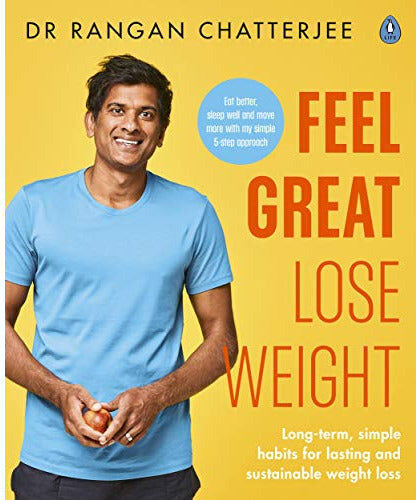
Penguin Feel Great Lose Weight: Long term, simple habits for lasting and sustainable weight lossTHE LATEST BOOK FROM THE AUTHOR OF THE SUNDAY TIMES #1 BESTSELLER FEEL BETTER IN 5'This is not a diet book. This is a whole new way of looking at what, why and how we eat and helps you design your own plan to build a better, healthier relationship with food' Fearne Cotton'A book with practical simple tips for everyone!' Tim Spector'It is a beautiful book and has so much in it to help us feel good and prioritise our happiness and health' Dr Gemma Newman'One of the most influential doctors in the country' Chris Evans _________________________________________________________________________It's more important than ever before that we get in shape, stay healthy and live well - Dr Chatterjee is back to show you how. Weight loss isn't a race. It isn't one size fits all. Drawing on twenty years of experience as a GP, Dr Rangan Chatterjee has created a conscious, long-lasting approach to weight loss that goes far beyond fad diets and helps to find the best solutions that work for you. Packed with quick and easy interventions this book will help you: 1. Understand the effects of what, why, when, where and how we eat2. Discover the root cause of your weight gain3. Nourish your body without any crash diets or gruelling workouts 4. Build a toolbox of techniques to help you lose weight, for goodWith Feel Great, Lose Weight you can make sustainable, medically-approved lifestyle changes and become a more energised, confident and healthy you. _________________________________________________________________________ 'A blame-free book' Telegraph'This book is extremely practical, insightful and easy-to-follow' The Happy Pears12,95 £*Shipping: 2,99 £Secure redirect to the provider
-
Penguin Life's Amazing Secrets: How to Find Balance and Purpose in Your Life by Gaur Gopal DasCrawling through the ruthless Mumbai traffic for hours on end, Gaur Gopal Das strikes up a conversation with his friend and young millionaire, Harry. Together, they explore the great frustrations of human condition in Harry's luxury sedan. To most of us, the modern city-life is like a battlefield, throwing up new challenges that leave us feeling stressed and defeated. That corporate job, the competition, financial pressures, strained relationships, rising crime, inflation... we wonder if there will ever be respite? Gaur Gopal Das, the immensely popular life-coach and an ISKCON monk, believes there is a way out and through this book, Life's Amazing Secrets he shows you how to conquer your daily battles, align yourself with your purpose and win at life!5,95 £*Shipping: 2,99 £Secure redirect to the provider
-
How should a design portfolio look?
A design portfolio should be visually appealing and well-organized, showcasing a variety of your best work. It should include a mix of different projects, such as branding, web design, print materials, and any other relevant work. Each project should be presented with high-quality images and a brief description explaining the concept and your role in the project. It's important to keep the portfolio updated with your latest work and to tailor it to the specific job or client you are applying to. **
-
What is the difference between a product portfolio and a process portfolio?
A product portfolio is a collection of all the products or services offered by a company, including their features, benefits, and target markets. It focuses on the range and variety of products a company offers. On the other hand, a process portfolio is a collection of all the processes and procedures used by a company to create, deliver, and support its products or services. It focuses on the methods and systems used to manage and improve the company's operations. In summary, a product portfolio is about the range of products offered, while a process portfolio is about the methods and systems used to create and deliver those products. **
-
How should an architecture portfolio be designed?
An architecture portfolio should be designed in a clean, organized, and visually appealing manner. It should showcase a variety of projects that highlight the breadth and depth of the architect's skills and experience. Including a mix of sketches, renderings, photographs, and drawings can help provide a comprehensive view of the architect's design capabilities. It is important to include a clear and concise description of each project, along with the architect's role and contributions. Lastly, the portfolio should be easy to navigate and should effectively communicate the architect's design aesthetic and style. **
-
How can an architecture portfolio be designed?
An architecture portfolio can be designed by showcasing a variety of projects that demonstrate a range of skills and styles. It should include a mix of drawings, renderings, photographs, and written descriptions to provide a comprehensive overview of the architect's work. Organizing the portfolio in a logical and visually appealing manner, with a clear table of contents and project descriptions, is essential. Including a brief introduction that highlights the architect's background, design philosophy, and key accomplishments can also help to make a strong impression on potential clients or employers. **
* All prices are inclusive of VAT and, if applicable, plus shipping costs. The offer information is based on the details provided by the respective shop and is updated through automated processes. Real-time updates do not occur, so deviations can occur in individual cases. ** Note: Parts of this content were created by AI.